


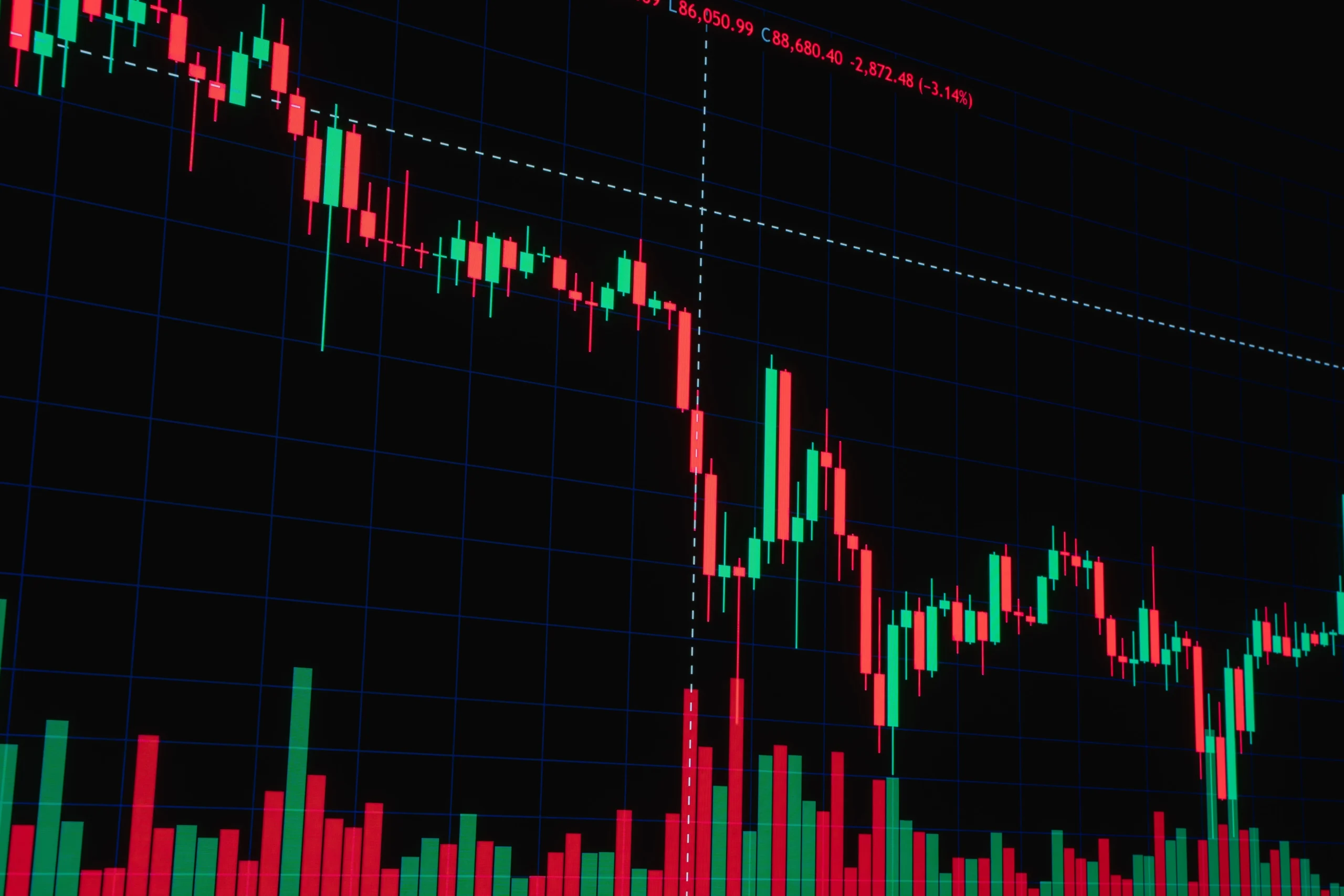
Few technology companies have become as closely connected to the artificial intelligence boom as NVIDIA. Its graphics processors power everything from advanced AI models and cloud computing infrastructure to scientific research and high-performance computing. As businesses invest heavily in artificial intelligence, NVIDIA has become an important company for investors watching the future of technology.
That attention has also made NVDA stock a major subject of market discussions. Some investors see NVIDIA as a long-term beneficiary of AI adoption, while others question whether the company’s rapid growth can continue at a pace that justifies its market valuation.
Both perspectives deserve consideration.
Understanding NVIDIA requires looking beyond its share price. Investors need to examine how the company makes money, whether demand for its products can remain strong, what its latest financial results reveal, and which risks could affect future performance.
This guide explores those factors to help readers understand NVIDIA’s business and evaluate the questions surrounding its stock.
What Is NVDA Stock?
NVDA is the stock ticker for NVIDIA Corporation, a technology company listed on the Nasdaq stock exchange. NVIDIA designs computing platforms, graphics processing units (GPUs), networking products, and software used in several technology markets.
The company originally became widely recognized for its graphics technology, particularly products used in gaming and professional visualization. Its role has since expanded considerably as GPUs have become essential tools for training and running artificial intelligence systems.
Unlike traditional processors designed primarily to execute general computing instructions, GPUs can perform many calculations simultaneously. This parallel-processing capability makes them useful for demanding workloads such as machine learning, scientific simulations, and large-scale data processing.
NVIDIA’s business is not limited to selling individual chips. Its broader platform includes hardware, networking, development tools, and software that help customers build and operate AI infrastructure.
For investors, this distinction matters. NVIDIA competes through an interconnected computing ecosystem, not simply through the specifications of a single graphics card.
Why Is NVIDIA Stock So Closely Connected to AI?
Artificial intelligence requires significant computing resources. Training advanced models involves processing enormous amounts of data, while operating AI services requires infrastructure capable of responding to users and applications at scale.
Companies developing AI assistants, cloud platforms, enterprise software, and research systems need computing equipment to support these activities. NVIDIA supplies many of the processors and related technologies used in that infrastructure.
Several developments contribute to demand for its products.
1. Data Center Expansion
Cloud providers and large technology companies are building data centers equipped to handle AI workloads. These facilities require accelerators, networking equipment, storage, power, and cooling systems.
NVIDIA benefits when customers purchase its computing platforms for these installations. However, the amount customers ultimately spend depends on their budgets, deployment schedules, and expectations about future AI demand.
2. Generative AI Adoption
Generative AI tools can produce text, images, software code, and other forms of content. Businesses are exploring applications in customer service, research, productivity, software development, and data analysis.
As organizations move beyond experimentation and introduce AI into everyday operations, their computing requirements may increase.
The important question is whether these deployments generate enough commercial value for customers to keep investing in additional infrastructure.
3. AI Inference
Training an AI model is only part of the process. Once a model is available, inference occurs whenever the system uses that model to answer a question, analyze information, or complete a task.
As AI applications attract more users, inference workloads can grow substantially. NVIDIA develops hardware and software intended to support these workloads efficiently.
Future demand will depend partly on how quickly AI services expand and how much computing power they require per task.
NVIDIA’s Latest Financial Performance
Financial results provide a clearer picture of NVIDIA’s business than headlines about artificial intelligence alone.
According to the company’s fiscal second-quarter 2027 results, released on August 26, 2026, NVIDIA reported $96.2 billion in quarterly revenue, representing a 106% increase compared with the same quarter a year earlier.
Its Data Center business generated $89.0 billion in revenue, up 117% year over year. This demonstrates how strongly AI infrastructure demand was contributing to the company’s reported performance during that period.
These figures are important, but investors should understand what they do and do not establish.
Strong historical growth shows that customers have been purchasing NVIDIA’s products at a rapidly increasing rate. It does not guarantee that revenue will continue growing at the same pace. Future performance will depend on demand, competition, product availability, customer spending, and other business conditions.
Investors should also examine profitability rather than revenue alone.
Useful financial measures include:
- Revenue growth: Shows whether sales are increasing or slowing.
- Gross margin: Indicates how much revenue remains after the cost of goods sold.
- Operating income: Helps show how effectively the business manages operating expenses.
- Earnings per share: Measures earnings attributable to each share of common stock.
- Cash flow: Helps investors assess how much cash the business generates and how it uses that cash.
Looking at these measures together provides a more balanced view of financial performance.
What Could Drive NVDA Stock Higher?
NVIDIA has several potential growth opportunities, although none guarantees a particular stock-market outcome.
Continued Investment in AI Infrastructure
Large technology companies continue to develop AI services, cloud platforms, and computing facilities. If investment in these areas remains strong, demand for NVIDIA’s products could benefit.
The key issue is the sustainability of customer spending. Investors should distinguish between announced infrastructure plans and projects that are funded, constructed, and operational.
New Computing Platforms
NVIDIA regularly develops new generations of processors and computing systems. Product improvements that deliver better performance, efficiency, or lower operating costs could encourage customers to upgrade their infrastructure.
However, new products must also meet customer requirements, become available at scale, and provide sufficient economic benefits to support purchasing decisions.
A Broader AI Market
AI adoption is not restricted to a small group of technology companies. Businesses in manufacturing, healthcare, finance, transportation, retail, and other sectors are investigating AI applications.
If these applications become widely adopted, demand for computing infrastructure could expand beyond today’s largest cloud providers.
That possibility represents a long-term opportunity, but the pace of adoption and its effect on NVIDIA’s revenue remain uncertain.
Software and Platform Integration
NVIDIA’s software ecosystem is another important part of its competitive position. Developers often consider software compatibility, development tools, performance, and support when selecting computing platforms.
A well-established ecosystem can make it easier for customers to build applications around existing technology.
Investors should nevertheless monitor competing platforms and alternative computing solutions, as customers may seek different combinations of performance, price, flexibility, and energy efficiency.
What Are the Biggest Risks for NVDA Stock?
A company can have an excellent business and still experience a significant decline in its stock price. The price investors pay matters, and expectations can change quickly.
1. High Market Expectations
When investors expect exceptional growth, even strong financial results may disappoint if they fall short of expectations.
For example, a company might increase revenue substantially but still see its stock decline if investors anticipated an even larger increase.
That is why stock analysis should compare financial performance with expectations, valuation, and forward guidance rather than focusing only on whether revenue increased.
2. Competition
NVIDIA faces competition from established semiconductor companies, cloud providers developing their own AI chips, and other businesses building specialized computing hardware.
Customers may also attempt to reduce costs by diversifying their suppliers or designing systems around alternative processors.
Competition does not automatically mean NVIDIA will lose its position. It does mean investors should monitor pricing, product performance, customer relationships, and market share over time.
3. Dependence on AI Spending
A significant part of NVIDIA’s growth has been connected to spending on AI infrastructure.
If major customers reduce their budgets, delay data center projects, or discover that their AI investments are producing weaker returns than expected, orders could slow.
A change in spending patterns could affect both revenue growth and investor expectations.
4. Export Restrictions and Geopolitical Issues
NVIDIA operates in international markets and can be affected by government restrictions on advanced computing products.
Export controls may limit access to certain customers or markets. Changes in trade policy can also create uncertainty around product availability, demand, and long-term planning.
Investors should review the company’s latest regulatory disclosures rather than assuming that historical access to a market will continue unchanged.
5. Manufacturing and Supply Constraints
Producing advanced semiconductor products requires specialized manufacturing, packaging, testing, and supply-chain capabilities.
Delays or shortages can affect the number of products NVIDIA can deliver and the timing of revenue recognition. Higher supply costs may also influence profitability.
Rapid growth creates an additional challenge: the company must coordinate production capacity with demand that can change faster than manufacturing infrastructure.
6. Customer Financing and Infrastructure Commitments
NVIDIA’s financial disclosures also deserve attention beyond conventional sales figures.
Its quarterly filing discusses commercial arrangements, capacity commitments, financing exposure, and guarantees connected with supporting AI infrastructure and customers. Such arrangements may help expand the ecosystem, but they can also create financial obligations if projects are delayed or counterparties fail to meet their commitments.
Investors should therefore consider cash flow, contractual commitments, customer concentration, and the financial condition of important partners alongside revenue growth.
Is NVDA Stock Overvalued?
There is no single valuation measure that can answer this question for every investor.
A common starting point is the price-to-earnings ratio, which compares a company’s share price with its earnings per share. Investors may also examine price-to-sales, free cash flow, earnings forecasts, and the company’s historical valuation range.
However, these measures require context.
A high valuation can sometimes be supported by strong earnings growth and durable competitive advantages. On the other hand, even a successful company can become a disappointing investment if its share price already reflects overly optimistic assumptions.
When evaluating NVDA stock, consider three questions:
How much growth is already reflected in the price? Compare the market valuation with realistic expectations for revenue, earnings, and cash flow.
Can NVIDIA maintain its competitive position? Examine its product roadmap, software ecosystem, customer relationships, and competitors.
What happens if growth slows? Consider whether the current valuation would remain reasonable under less optimistic assumptions.
Investors should use current market prices and the latest financial statements when performing these calculations. A valuation based on outdated prices or earnings forecasts may produce a misleading conclusion.
How to Research NVDA Stock Before Investing
A disciplined research process can help investors avoid decisions driven mainly by headlines.
Start with NVIDIA’s official investor relations website and review its latest quarterly results, annual reports, and management guidance. These documents provide information about revenue, profitability, risks, and management’s expectations.
Next, compare several reporting periods rather than relying on one strong quarter. Look for changes in growth rates, margins, cash generation, and customer spending.
It can also help to understand the broader technology landscape. AI infrastructure is influenced by cloud computing, energy availability, semiconductor manufacturing, and the commercial success of AI applications.
Technology trends can affect businesses and households in different ways. Readers interested in the wider relationship between technology and everyday living can explore technology and modern lifestyle topics on UrbanDawn.
Finally, establish your own investment criteria. Consider your time horizon, diversification, tolerance for losses, and the role a single technology stock would play in your portfolio.
No amount of research can eliminate investment risk, but a structured process can make decisions more informed.
NVDA Stock: Long-Term Investment or Short-Term Trade?
The answer depends on the investor’s objectives and approach.
Long-term investors may focus on NVIDIA’s competitive position, future earnings potential, AI adoption, and valuation over several years. They must still be prepared for periods when the share price falls even if the underlying business remains strong.
Short-term traders may pay more attention to earnings announcements, analyst expectations, market sentiment, and price movements. This approach carries its own risks, particularly when markets react sharply to unexpected news.
Neither approach makes a profit inevitable.
A useful principle is to separate confidence in a company’s technology from confidence in the price of its stock. These are related, but they are not the same decision.
Frequently Asked Questions About NVDA Stock
What company does NVDA represent?
NVDA is the Nasdaq ticker symbol for NVIDIA Corporation, a technology company known for GPUs, AI computing platforms, data center products, and related software.
Why is NVDA stock popular among investors?
NVIDIA plays a major role in supplying computing technology used in artificial intelligence and data centers. Its rapid revenue growth has attracted attention from investors interested in the expansion of AI infrastructure.
Is NVDA stock a good investment in 2026?
That depends on the stock’s current valuation, NVIDIA’s future performance, and your financial circumstances. Strong business growth alone does not guarantee a profitable investment. Research the latest financial results, risks, and market price before making a decision.
Does NVIDIA make money only from AI chips?
No. NVIDIA also serves markets such as gaming, professional visualization, automotive computing, and related software and platforms. Data Center has been its largest reported revenue contributor in recent quarters.
What should investors watch in NVIDIA’s next earnings report?
Pay attention to revenue growth, Data Center performance, gross margin, earnings per share, cash flow, management guidance, supply constraints, and commentary about customer demand.
Can NVDA stock fall even if NVIDIA reports strong earnings?
Yes. A stock price reflects expectations as well as reported results. If investors expected stronger results or become concerned about future growth, the share price can fall despite positive financial performance.
Final Thoughts on NVDA Stock
NVIDIA has established a significant position in the technology supporting artificial intelligence, and its recent financial results demonstrate the scale of demand it has been serving. Its computing platforms, software ecosystem, and relationships with major customers provide important strengths.
Yet investors should not treat the AI boom as a guarantee of future stock-market returns. Competition, customer spending, manufacturing constraints, regulatory developments, financial commitments, and valuation can all influence performance.
The most useful way to approach NVDA stock is to evaluate the business and the investment separately. Study the financial evidence, examine the risks, compare the market price with realistic expectations, and decide whether the potential return justifies the uncertainty.
For readers following the intersection of technology, business, and daily life, UrbanDawn offers another place to explore how changing digital trends influence the world around us.
Disclaimer: This article is for educational and informational purposes only. It is not financial advice or a recommendation to buy or sell any security. Stock prices and financial conditions change, so verify current information and consult a qualified financial professional when appropriate.

